How the Netherlands is building a seaweed industry
Dutch chemists, biologists, and engineers lay the groundwork for an ambitious national plan
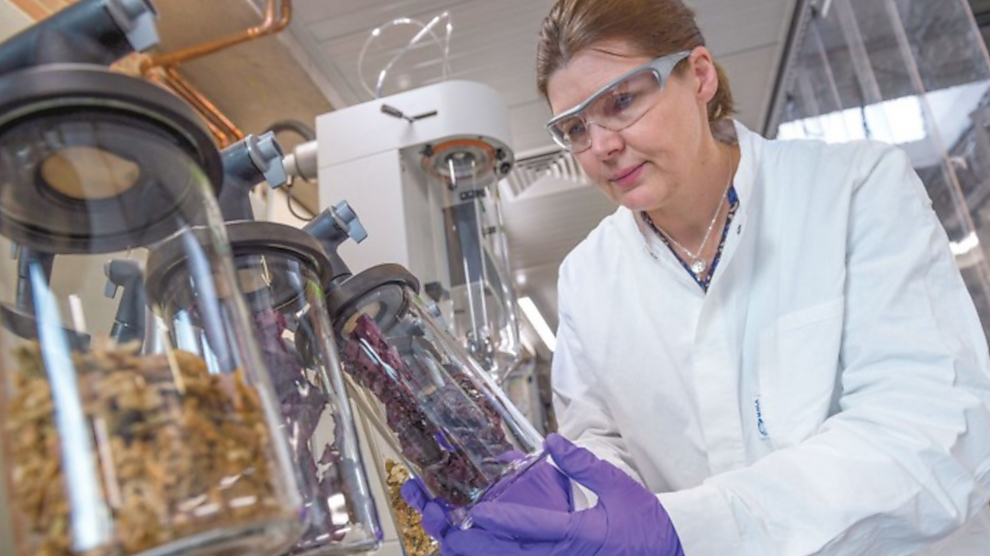
Bordering the cold, gray North Sea, the upper reaches of the Netherlands are dominated by flat, sandy farmland stretching as far as the eye can see. This quiet, windswept landscape, some of which sits below sea level, is an unlikely contender to become a major chemical industry hub. But momentum is building among Dutch research organizations to turn it into a center for the sustainable production of biofuels and specialty chemicals from a largely untapped resource: seaweed.
“The idea is to transform the North Sea into an energy- and raw-material-generating region,” says Jaap van Hal, innovation manager for biorefining at TNO, a Dutch government-funded research institute with expertise in converting biomass into fuels and chemicals. The proposal to mass-produce and process seaweed in the region has attracted funding from the European Union and national and regional Dutch governments. The endeavor requires companies to cultivate and harvest seaweed, as well as have the know-how to turn the macroalgae into products. Fortunately, organizations with this expertise are already in place in the region. It’s far from clear, though, whether the Dutch will be able to transform what is largely a state-funded endeavor into an economically viable business. The central challenge will be to reduce the cost of large-scale seaweed cultivation, harvesting, and upgrading to a fraction of current levels.
For sugar kelp, a seaweed rich in sugars that is ideal for converting into fuels and chemicals, this means devising materials on which the macroalgae can grow in the North Sea. In a bid to make harvesting easier, marine biologists in the Netherlands are also trying out cultivation systems for fast-growing seaweed such as Ulva lactuca—also known as sea lettuce—in saltwater tanks on land. Meanwhile, other organizations, including Wageningen University & Research (WUR), are working on extracting compounds from seaweed to make products such as animal-feed additives.
Read more.