Making money from trash
SusPhos aims to upcycle the phosphate (by)products from wastewater
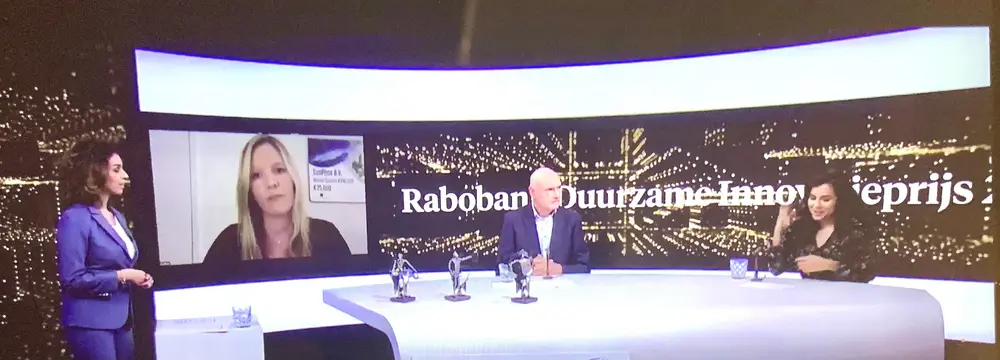
Last year, the Dutch start-up SusPhos was awarded the Rabobank Sustainable Innovation Award – for good reasons. It is a budding firm, trying to reuse a vital element which also is one of the major sources of environmental pollution. Its strategy is upcycling its components into marketable products – and making money in the process. An interview with its Chemical Production Engineer, dr. Victor Ajao.
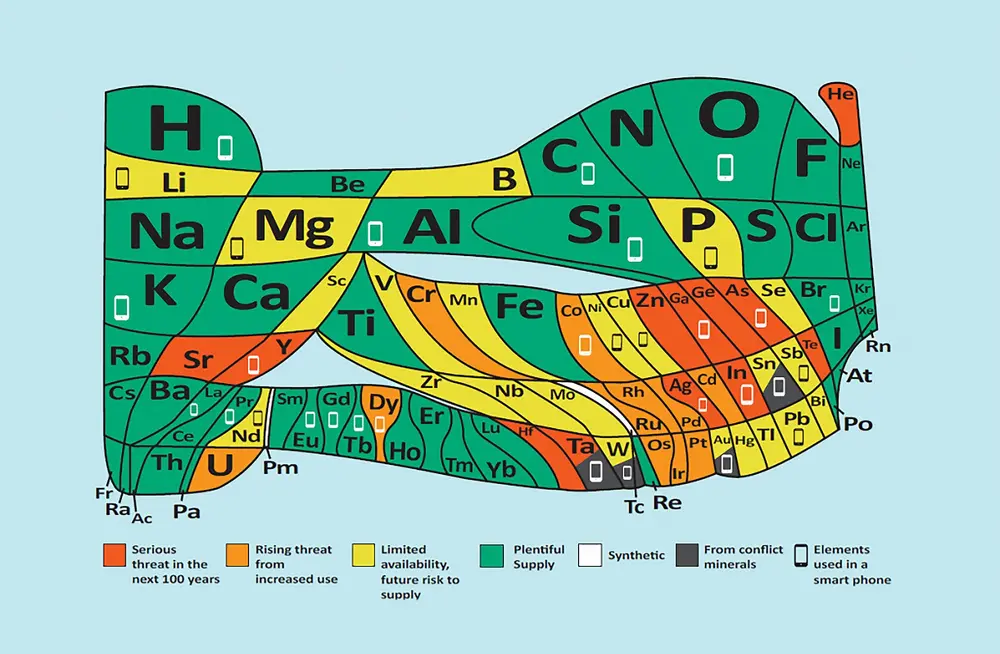
In 2019, the European Chemical Society (EuChemS) published a weird-looking version of the Periodic Table, with warped lines and strange colours. It was designed to visualise the amount of naturally occurring elements available on earth – and the shortages that will arise if we go on using them in the way we do now. At a single glance it is obvious that we are running out of elements like Gallium and Yttrium fast and that even Zinc and Helium are getting scarce. But it is surprising to see that Phosphorus, part of every living being on earth, will be in limited supply in the future. In Europe, the mines providing mineral Phosphorus will be depleted in the next decades. With more than 90% of the EU phosphorus use dependent on imports, it has been listed as an EU critical raw material.
It is surprising to see that Phosphorus will be in limited supply in the future
The irony is that Phosphorus, together with Nitrogen, is one of the main drivers of environmental pollution of surface water – leading to excessive algae growth (eutrophication). On the one hand, we spend a lot of time and money to pack the right amount of phosphorus into fertilizer, on the other, we have to keep it out of the surface water to prevent eutrophication. It’s a classical opportunity for recycling - but there is a catch.
Using phosphate waste to produce sustainable materials
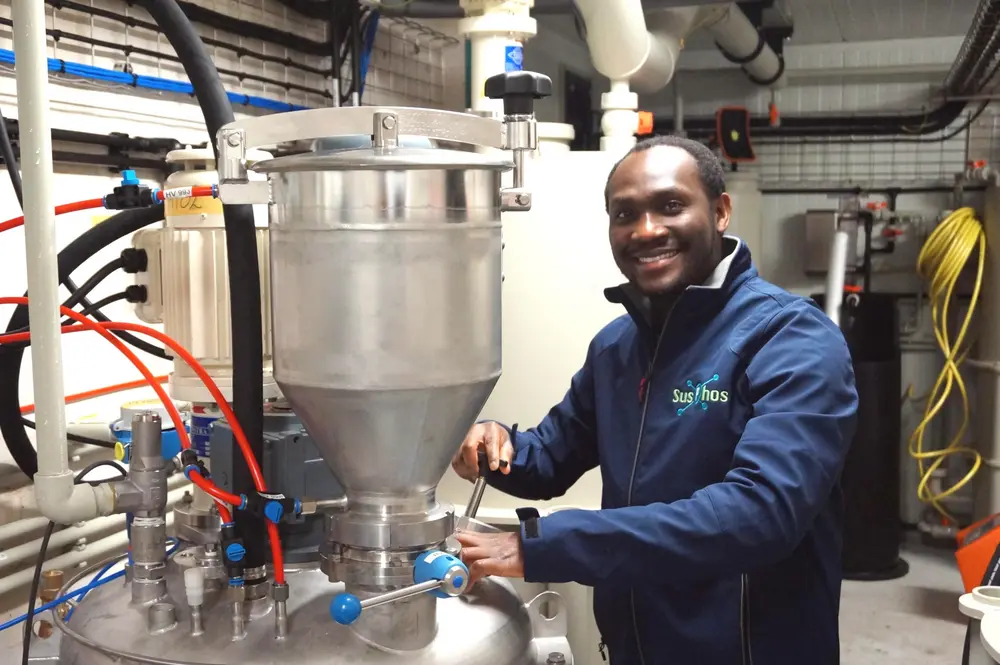
Victor Ajao, Chemical Production Engineer at SusPhos, sums it up: “Most of our daily intake of phosphorus ends up in the sewage and finally in the sewage treatment plants. Hence, these treatment plants become the ‘mines’ from where we can recover phosphorus.” Wastewater products such as struvite (magnesium ammonium phosphate NH4MgPO4·6H2O) have gained increasing attention as a slow-releasing fertilizer. However, some farmers have reservations to use it, as struvite is not as fast and efficient as the traditional (mined) phosphate fertilizers. Many wastewater treatment plants have therefore recovered tonnes of struvite without being able to get a good price for it.
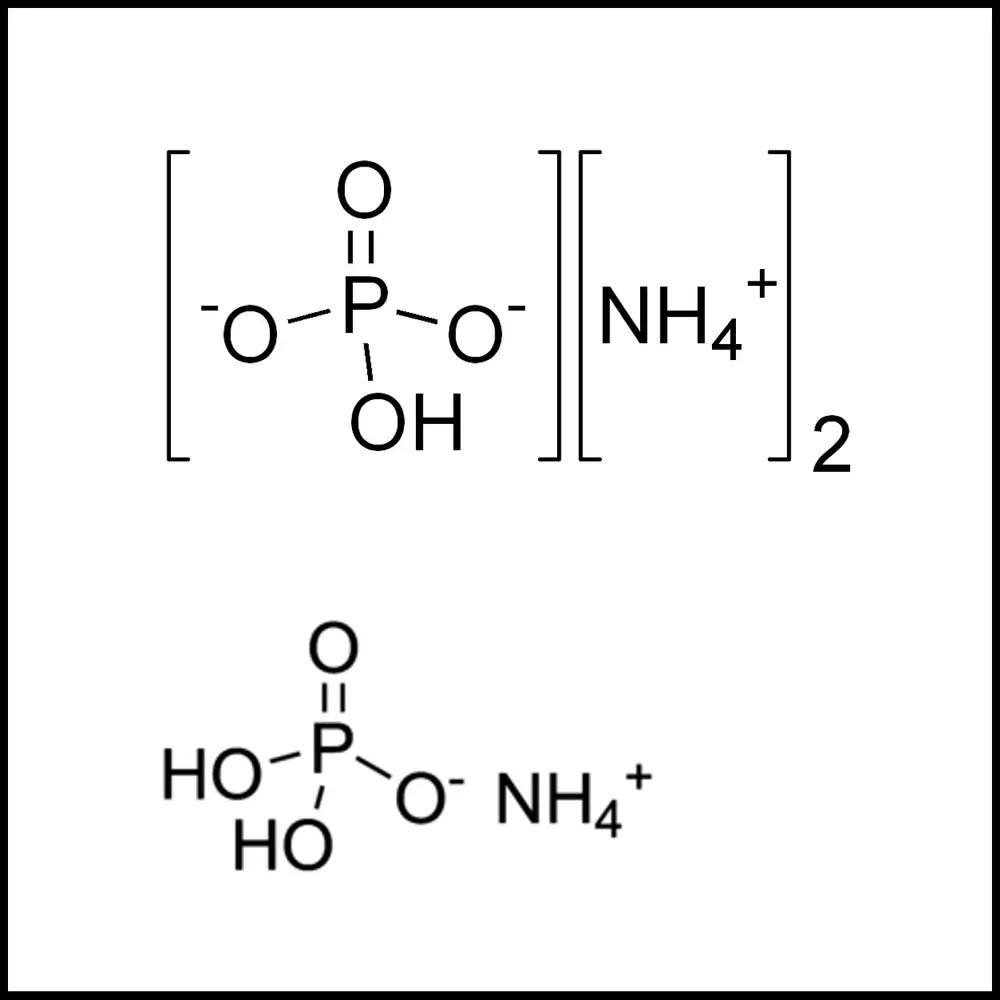
And that is where SusPhos comes in. The start-up, which was established in March 2019, aims to upcycle the colossal amounts of phosphate (by)products from wastewater and agricultural industries to high-value products. For instance: through a series of patented processes – first developed by Ing. Bas de Jong, dr. Chris Slootweg (both University of Amsterdam - UvA) and his then PhD student, dr. Marissa de Boer – the waste struvite is processed into phosphorus-based flame retardants – highly marketable chemical compounds which are used extensively (about 2.2 Mtons tons used globally and growing by 8% annually) in clothing, furniture, and many other products.
Biobusiness
“These flame-retardants are very much in demand by the textile industry, especially because they are produced in a sustainable way and at present there are no recycled phosphate flame retardants on the market,” Victor says. “So we have had to scale up the process. We already moved from milligrams and grams to kilograms in the lab. That was enough to provide potential customers with samples. And we were eager to go on. In December 2020, our pilot plant was finished at the BioBizz Hub in Balk, Friesland.”
The BioBizz Hub is a facility on the grounds of Paques Technology, a well-known player in the world of wastewater treatment. Here, scale-ups or SMEs in water- or biobased technology can test and validate their innovations, in order to scale up and bring new technology to the market. The Hub also provides help in marketing, sales and finance. Ajao: “For us, it was a pretty big step forward: the pilot plant can deal with 20 tons of struvite (and other starting materials) per year. It has been moved from Balk to the Wetterskip location Leeuwarden, where there is a Demo site with a permit to run such a chemical pilot plant.”
Many sources
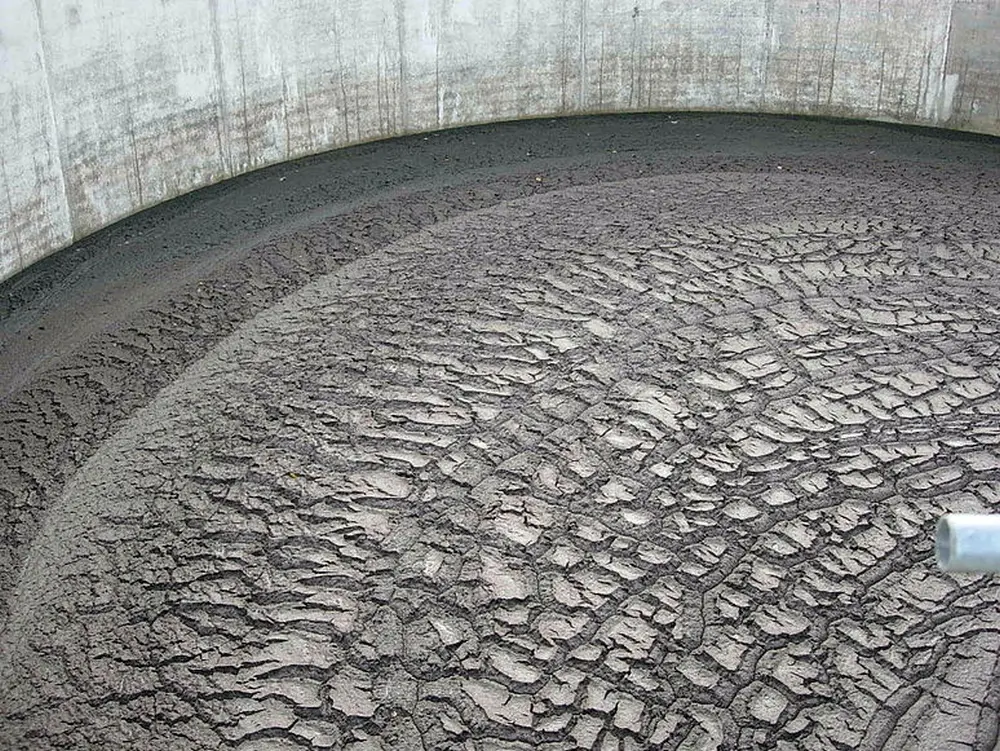
Struvite is not the only source SusPhos is looking at. Sewage sludge ash is another possible raw material for the process that will be tested at the pilot. “In Holland, the standard procedure is to incinerate the sludge that remains after waste water treatment - for instance at SNB, in Noord Brabant,” Victor explains. “The resulting ash again is a problem to get rid of, but it is still rich in phosphate. And every year, over 60.000 tons of ash are produced in the Netherlands! So we are concentrating now on doing tests with the ash. If you are going to build a full-scale version of our plant, you will need a lot of material to feed it, and ash, at the moment is available in large quantities, much more than struvite or other possible starting materials.”
Another material SusPhos is interested in, is Vivianite (Fe2+Fe22+(PO4)2·8H2O), hydrated iron (II) phosphate. In this project involving Vivianite, we are collaborating with Wetsus, where a lot of studies have been carried out on Vivianite recovery from wastewater. It looks like a promising material to separate both iron and phosphate from otherwise sewage waste. Tests with sludge ash and Vivianite will also be executed at the new pilot plant.
Closing the cycle
“SusPhos aims to close the cycle for all the materials involved. The processes used offer quite a few possibilities: ammonium sulfate ((NH₄)₂SO₄), for instance, is a product that can be sold also in the flame retardant market. The magnesium salt also has a potential to be sold as a chemical or returned to waste water plants, where it can be reused to recover struvite again, instead of using virgin magnesium salt for struvite formation. Victor Ajao continues: “The same goes for Vivianite. If you isolate the iron, you can use that again in the water plants, to precipitate phosphate from wastewater. We continually try to design our processes and reactions to minimize the amount of waste.”
It’s the production of high-value compounds, that may turn SusPhos into a commercial success
Making the world go round
On the other hand, SusPhos has to make money. Ajao: “The good thing is that we can get up to four usable products from a single process. And we try to keep it simple. The main processes of our technology are acidulation, solvent extraction, and functionalisation. There are other minor processes in between but these three are the major ones.”
Phosphoric acid is also one of the products from the process. It may not bring a lot of money, but it is still valuable and helps to make the process of recycling waste streams as circular as possible. But it’s the production of high-value compounds like flame retardants, that may turn SusPhos from an environmental front-runner into a commercial success.